 Proudly BC Owned & Operated for over 40 years.
Keeping Your Garden Thriving Under Restrictions
Summer is here — and with it comes the heat, the long sunny days, and the joy of watching your garden grow. It also brings water restrictions across the region. The good news? Effective July 16, 2026, Metro Vancouver and the North Shore have stepped down to Stage 2 restrictions, giving gardeners a little more flexibility. Some other municipalities may still be at Stage 3, so it’s worth checking with your local city or district if you’re unsure. Either way, with the right approach you can absolutely keep your garden healthy, support plants that are still establishing, and do your part to protect our shared water supply. Here’s everything you need to know.
Understanding the Current Restrictions
Knowing which stage applies to you helps you make the most of your garden time. Here’s a clear breakdown of what’s allowed under each stage:
Stage 2 (Metro Vancouver & North Shore, effective July 16, 2026) — What IS allowed:
- Hand watering any day, any time by container, drip irrigation, soaker hose, or hose with a spring-loaded shut-off nozzle.
- Sprinklers for trees, shrubs, and flowers — any day, between 4:00 am and 9:00 am only.
- Tree watering bags — an excellent option for newly planted trees, permitted anytime.
- Vegetable gardens can be watered at any time.
- Rainwater, grey water, and recycled water are never restricted — collect and use freely!
Stage 2 — What is still NOT allowed:
- Lawn watering of any kind. Lawns will go dormant and brown, but they WILL bounce back in the fall.
- Sprinklers for gardens outside the permitted 4:00 am–9:00 am window.
- Filling or topping up pools, hot tubs, or decorative water features.
Still on Stage 3? Here’s what that means for your garden:
- Hand watering by container, drip irrigation, or hose with a spring-loaded shut-off nozzle — any day, any time. (No sprinklers or soaker hoses.)
- Vegetable gardens can be watered at any time.
- No lawn watering, no sprinklers for ornamental gardens, no soaker hoses, no filling pools or hot tubs.
Not sure which stage applies to you? Check with your local city or district, or visit metrovancouver.org/services/water/water-restrictions for the latest information.
Caring for New & Establishing Plants During a Hot, Dry Summer
Plants installed this spring and summer are the most vulnerable. Their root systems haven’t yet spread deep enough to find water on their own. The great news is that hand watering and drip irrigation — the methods permitted under both Stage 2 and Stage 3 — are actually the most effective methods for getting water directly to roots. Here’s how to make every drop count:
Smart Watering Habits
- Water early in the morning (before 10 am) The cooler temperatures and lower wind mean less evaporation and more water reaching roots.
- Water deeply and less frequently rather than a little every day. Deep watering encourages roots to grow down, making plants more drought-resilient.
- Direct water at the soil, not the leaves. Wet foliage can encourage fungal disease, and the roots are where it matters.
- Check soil moisture before watering by pushing your finger 5 cm into the soil. Only water when it feels dry at that depth.
- Group thirsty plants together to make hand watering more efficient.
The Right Tools Make All the Difference
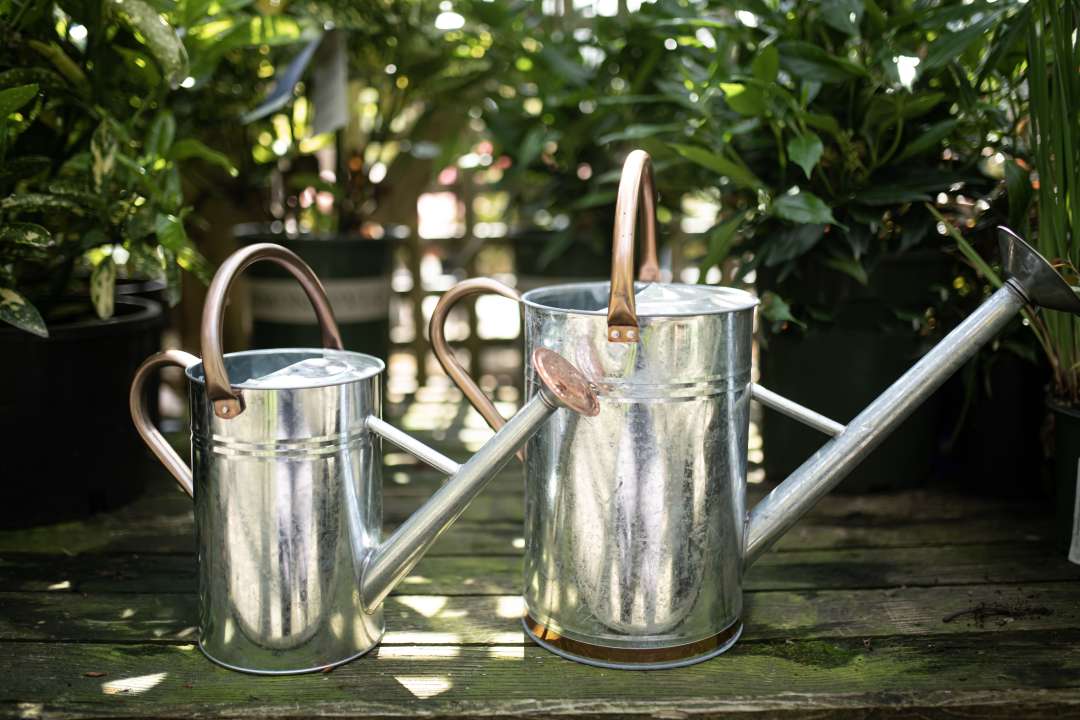
Watering Cans
Classic and allowed under current restrictions. A large-capacity watering can reduces trips to the tap, saving both time and water. Look for one with a long neck for easy reach into beds without trampling plants.
- Choose a capacity of 8–10 litres for garden beds to minimize refill trips.
- A fine rose head is ideal for seedlings and annuals; remove it for deep watering of shrubs and perennials.
- Check regularly for leaks, even a slow drip adds up quickly.
Hose with a Spring-Loaded Shut-Off Nozzle
A shut-off nozzle on your hose is required year-round in Metro Vancouver and is also your most water-efficient option. It lets you direct flow precisely and stops water the moment you release your grip.
- Adjust the nozzle to a gentle, low-pressure flow for garden beds, a strong jet can compact soil and damage roots.
- Use a wand extension for easier reach at soil level without bending.
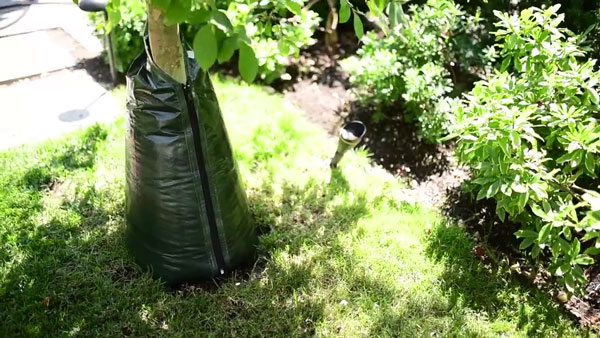
Tree Watering Bags
One of the smartest investments for any newly planted tree. These slow-release bags wrap around the trunk and drip water directly to the root zone over several hours, eliminating runoff completely.
- Fill once or twice a week depending on outdoor temperatures. The slow drip does the deep watering work for you.
- Especially valuable during the first 1–3 years of a tree’s life while it establishes.
- Permitted and ideal under both Stage 2 and Stage 3 restrictions.
Drip Irrigation
Drip irrigation is permitted under both Stage 2 and Stage 3 and is the most water-efficient method available for garden beds. It delivers water slowly and directly to root zones, dramatically reducing evaporation.
- Consider installing a simple drip system for vegetable gardens and mixed borders. It pays for itself quickly in water savings and plant health.
TIP: Pair with a timer so beds receive water in the early morning even when you’re away.
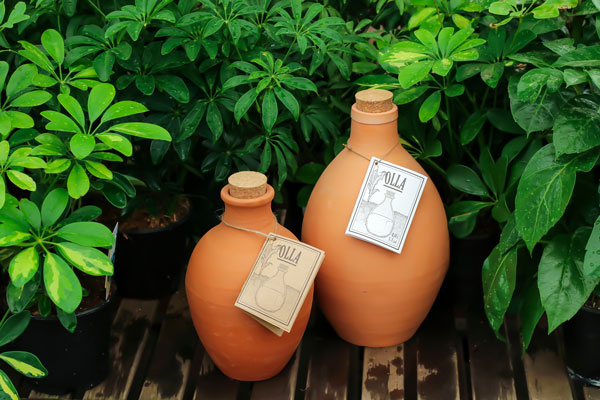
Garden Olla Watering Pots
An ancient and beautiful solution. Porous clay ollas are buried in the ground and filled with water, which seeps slowly into the surrounding soil. They lose almost nothing to evaporation and water exactly where roots need it.
- Great for vegetable beds, herb gardens, and newly planted perennial borders.
- Refill every few days during heat waves; less frequently in cooler weather.
- Perfectly compliant under current restrictions.
Mulching: Your Garden’s Best Friend This Summer
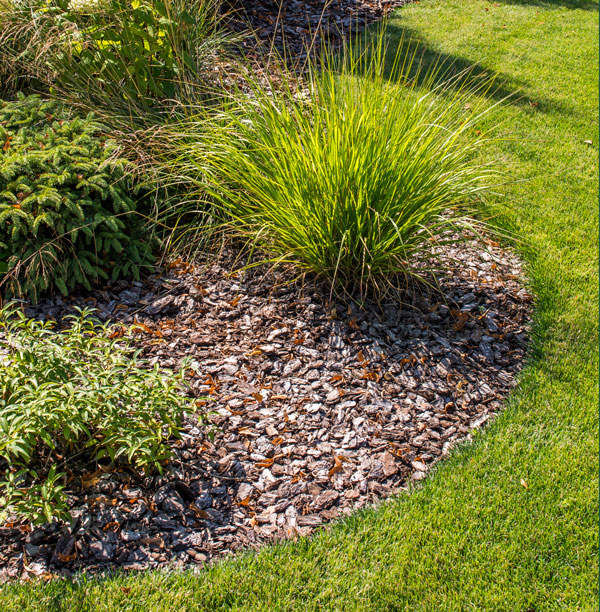
A good layer of mulch is one of the single most effective things you can do for your garden during water restrictions. It slows evaporation, keeps roots cooler, suppresses weeds that compete for moisture, and improves soil health over time. Aim for 5–8 cm in garden beds.
- Apply mulch around trees, shrubs, and perennial beds. You’ll water significantly less.
- Keep mulch a few centimetres away from plant stems and tree trunks to prevent moisture-related rot and disease.
- Top up mulch that has thinned over time. A fresh layer in summer makes a big difference.
A Note on FireSmart Mulching
Mulch is wonderful for gardens, and with wildfire risk elevated across BC this summer, it’s worth being thoughtful about where and how you use organic mulches. FireSmart BC guidelines provide clear, practical guidance:
- Maintain a 1.5-metre non-combustible zone directly around your home, deck, and any attached structures. This means no bark mulch, wood chips, or organic material in this zone. Use gravel, rock, or stone instead.
- Bark mulch, wood chips, and evergreen needle mulches can be flammable and should not be used directly against buildings or fences connected to your home.
- Mature compost is considered lower risk and is a great FireSmart-friendly option for mulching in garden beds away from structures, plus it feeds your soil!
- Keep mulch and organic debris clear of gutters and rooftops.
The bottom line: mulch generously for water retention, choose your mulch type thoughtfully near structures, and your garden and home both benefit.
Don’t Worry About Your Lawn
Lawns cannot be watered under Stage 3 restrictions, and they will go brown and dormant. This is completely normal and nothing to stress about.
- Dormant grass is not dead grass. Established lawns will green up again beautifully once the fall rains return.
- Keep grass cut short (under 10 cm) when it’s growing. Shorter grass is less flammable and recovers better from drought.
- Avoid fertilizing your lawn during drought and restriction periods as it pushes growth the plant can’t sustain without water.
- Focus your watering energy on trees, shrubs, and new plantings that cannot be replaced as easily.
Capture Every Drop: Rainwater & Grey Water
Restrictions apply to Metro Vancouver’s treated drinking water. They do NOT apply to rainwater, grey water, or recycled water. This is a great opportunity to put these sources to work:
- Rain barrel: connect a barrel to your downspout to collect roof runoff. Even a small amount of summer rain provides a valuable supplement for hand watering.
- Pasta water, vegetable rinse water, and other clean cooking water can go straight on the garden.
- Rinse water from washing produce is fine for ornamental beds.
- Consider a simple grey water diverter to redirect laundry water to garden use (check local bylaws for your municipality)
Quick Tips by Plant Type
Trees & Shrubs (newly planted in the last 1–2 years):
- Priority #1 for your watering efforts.
- Deep water 2–3 times per week during hot spells using a tree bag, hose, or multiple watering cans.
- A tree watering bag makes this effortless and highly effective.
Perennials & Annuals:
- Water at the base of plants in the mornings.
- New perennials need consistent moisture to establish. Don’t let them wilt repeatedly or they will struggle.
- Container annuals dry out quickly and may need daily watering in peak summer heat. Containers are not subject to restrictions and can be watered as needed.
Vegetables & Edibles:
- Vegetables need consistent moisture to produce well. Inconsistent watering leads to blossom end rot and splitting fruit.
- Drip irrigation or hand watering at the soil level is ideal.
- Mulch between rows to dramatically reduce how often you need to water.
Note: Good news for food gardeners! Vegetable gardens can be watered at any time under Stage 3 restrictions. Hand watering and drip irrigation remain the most water-efficient methods and are always the best choice for healthy, productive plants.
Hanging Baskets & Containers:
- http://metrovancouver.org/services/water/water-restrictionsContainers dry out fast. Check daily and water when the top inch of soil is dry.
- Move containers to a shadier spot during extreme heat to reduce water loss.
- Add water-retaining granules to potting mix or top-dress with a thin layer of mulch.
- Self-watering pots and reservoir inserts are excellent for reducing watering frequency.
You’ve Got This
Water restrictions don’t have to mean a struggling garden. With smart watering techniques, good mulch, the right tools, and a little attention, your plants, including those still getting established, can thrive through the summer. Every drop saved helps protect our shared water supply for drinking, cooking, firefighting, and future seasons.
Our Gardenworks team is always happy to help you choose the best watering tools, mulch, and water-wise plants for your space. Come in and chat with us!
Further reading: See our Care Sheets on Water Wise Plants at gardenworks.ca
Metro Vancouver Stage 3 restrictions info: metrovancouver.org/services/water/water-restrictions
FireSmart BC landscaping guidance: firesmartbc.ca/landscaping-hub