
 Proudly BC Owned & Operated for over 40 years.
Camellia Care Guide for BC
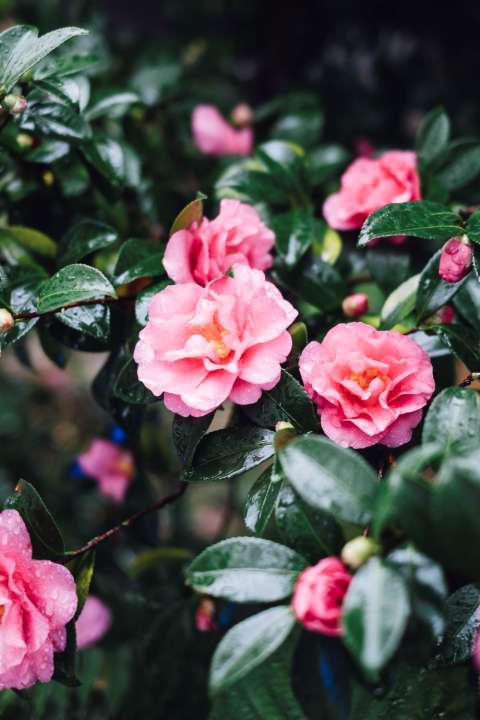
How to Plant, Grow & Care for Camellias
Camellias are elegant evergreen shrubs known for their glossy foliage and beautiful rose-like flowers that bloom from fall through spring depending on the variety. These long-lived plants bring colour to the garden during seasons when few other shrubs are flowering.
Camellias thrive in sheltered gardens with acidic soil and consistent moisture, making them excellent companions to rhododendrons and azaleas.

Understanding Camellia Types
Different camellia species bloom at different times of year.
Camellia japonica
-
Large, showy flowers
-
Blooms late winter through spring
-
Grows as a large evergreen shrub
One of the most commonly planted camellias.
Camellia sasanqua
-
Smaller flowers but often very abundant
-
Blooms fall through early winter
-
More tolerant of sun than japonica types
Often used as hedges or screening plants.
Hybrid Camellias
-
Crosses between different camellia species
-
Often combine improved cold tolerance with beautiful flowers
-
Bloom times vary by variety
Your local GARDENWORKS team can help you select varieties suited to your garden.
How to Plant Camellias
Camellias establish best when planted in the right soil and location.
Sun Requirements
-
Partial shade is ideal, although Camellia sasanqua are more sun tolerant
-
Morning sun with afternoon shade works best
-
Avoid hot afternoon sun, especially inland
Too much sun can cause leaf scorch or faded flowers.
Soil Requirements
Camellias require:
-
Acidic soil (pH 5.0–6.5)
-
Rich organic matter
-
Excellent drainage
Amend soil with compost and bark mulch before planting.
Planting Steps
-
Dig a hole twice as wide as the root ball.
-
Improve soil with compost and organic matter such as Sea Soil, GW Composted Mushroom Manure or GW Composted Cattle Manure
-
Plant slightly above surrounding soil level.
-
Water thoroughly with GW Transplanting Fertilizer 5-15-5 after planting to encourage strong root development.
-
Apply 2–3 inches of mulch.
Keep mulch away from the trunk.
Watering Camellias
Camellias prefer evenly moist soil.
-
Water regularly during the first growing season
-
Maintain moisture during summer dry periods
-
Avoid soggy or poorly drained soil
Mulching helps retain moisture and protect shallow roots.
Fertilizing Camellias
-
Use fertilizer formulated for acid-loving plants such as GW Rhododendron & Azalea Food 10-8-6
-
Apply in early spring after flowering
-
Compost top-dressing improves soil health
Avoid excessive fertilizing.
Pruning Camellias
Camellias require minimal pruning.
-
Lightly shape after flowering
-
Remove dead or damaged branches anytime
-
Thin dense growth if needed
Heavy pruning may reduce flowering the following season.
Growing Camellias in South Coastal BC
South Coastal BC provides ideal conditions for camellias.
Climate Advantages
-
Mild winters
-
Moderate summer temperatures
-
Higher humidity
These conditions closely resemble the plants’ native environments.
Coastal Considerations
-
Protect from strong winter winds
-
Ensure good drainage in clay soils
-
Provide afternoon shade for best flower quality
Many camellias thrive in coastal BC gardens and can become large, long-lived shrubs.
Common Camellia Problems & Solutions
Camellias are generally reliable shrubs when grown in the right conditions, but a few common issues can affect their growth and flowering.
Bud Drop (Buds Falling Before Opening)
One of the most common camellia problems is buds dropping before they bloom.
Possible causes:
-
Inconsistent watering
-
Sudden temperature changes
-
Late frost damage
-
Too much shade
-
Poor soil drainage
-
Poor air circulation causing fungal issues
How to prevent it:
-
Maintain consistent soil moisture
-
Mulch to protect shallow roots
-
Plant in a sheltered location
-
Avoid moving plants once buds have formed
Yellow Leaves
Yellow leaves can indicate several different issues.
Possible causes:
-
Soil that is too alkaline
-
Poor drainage
-
Nutrient deficiency
-
Overwatering
Solutions:
-
Test soil pH and maintain acidic soil conditions
-
Improve drainage with organic matter
-
Apply fertilizer designed for acid-loving plants
Brown or Scorched Leaves
Leaf scorch can occur during hot or dry conditions.
Possible causes:
-
Excessive sun exposure
-
Drought stress
-
Wind exposure
Solutions:
-
Provide afternoon shade
-
Water deeply during dry periods
-
Plant in protected locations
Few or No Flowers
If your camellia has healthy foliage but few blooms, it may be due to environmental factors.
Possible causes:
-
Too much shade
-
Heavy pruning at the wrong time
-
Excess nitrogen fertilizer
-
Frost damage to flower buds
Solutions:
-
Increase sunlight exposure
-
Prune only after flowering
-
Avoid high-nitrogen fertilizers
Slow Growth
Camellias are naturally slow-growing shrubs, but extremely slow growth may indicate soil or site issues.
Possible causes:
-
Poor soil quality
-
Lack of organic matter
-
Compacted soil
Solutions:
-
Improve soil with compost
-
Maintain a thick mulch layer
-
Avoid disturbing shallow roots
Winter Damage
In colder areas or exposed gardens, winter conditions may damage foliage or buds.
Prevention tips:
-
Plant camellias in sheltered locations
-
Protect from cold winter winds
-
Mulch root zones before winter
Seasonal Camellia Care Calendar
Late Winter / Early Spring
-
Enjoy flowering (japonica varieties)
-
Light pruning after bloom
Spring
-
Apply compost or acid-loving fertilizer
Summer
-
Maintain consistent watering
-
Protect from extreme heat inland
Fall
-
Sasanqua camellias begin blooming
-
Maintain mulch layer
Winter
-
Protect from strong winds inland
Camellia FAQs
Do camellias grow well in BC?
Yes, especially in South Coastal BC where the mild climate suits them well.
Can camellias grow in Penticton?
They may grow in protected locations with amended soil and winter protection, but conditions are generally not ideal for growing them successfully.
Do camellias need acidic soil?
Yes. Like rhododendrons and azaleas, camellias prefer acidic soil.
When should camellias be pruned?
Prune lightly after flowering to maintain shape.