 Proudly BC Owned & Operated for over 40 years.
Spring Bulbs
Plant: October to December | Blooms: January to June | Sun or Shade | Containers, Borders & Lawns
|
OVERVIEW The glory of spring starts with a decision made in autumn. Spring-blooming bulbs are planted in fall, lie quietly through winter, and then erupt into colour just when the garden needs it most. They are among the easiest, most rewarding plants you can grow -- plant them once and most will return faithfully for years. This guide covers everything you need to know to choose, plant, and care for spring bulbs across BC's South Coast and in Penticton. |
WHEN TO PLANT
Planting windows across BC
• The ideal planting window is late September through November across all GARDENWORKS locations
• Bulbs can be planted as late as December in BC's mild South Coast climate, as long as the soil is not frozen
• Earlier planting is always better: more root development before winter means more vigorous spring flowering
• In Penticton, aim to plant by end of October before the ground freezes; earlier planting gives roots more time to establish
|
DO NOT DELAY Bulbs sitting in a bag at room temperature continue to use their stored energy. Plant promptly once purchased. If you cannot plant immediately, store bulbs in a cool, dark, well-ventilated spot until you can. |
CHOOSING BULBS
Quality matters more than you think
• Buy the largest, firmest bulbs you can find: the flower is already formed inside and a larger bulb means a larger bloom
• Avoid soft, mouldy, or very lightweight bulbs: these are unlikely to perform well
• Top-quality bulbs cost more per bulb but deliver dramatically better results for the same effort of planting
PLANTING
How to plant spring bulbs
• Loosen the soil in the planting area to at least the depth required for your largest bulb, typically 15-20 cm for large bulbs such as tulips and daffodils
• Add GARDENWORKS Bone Meal 2-14-0 or GARDENWORKS Bulb Food 3-15-8 3to the bottom of each hole before placing the bulb: this encourages strong root development through winter and supports next year's flowering
• Place the bulb pointy end up, flat or root end down
• Plant at the correct depth for each bulb type (see reference table below)
• Backfill, firm gently, and water thoroughly immediately after planting to encourage fast establishment before winter
• After flowering, feed again with GARDENWORKS Bulb Food to replenish energy stored in the bulb for next season
• Let the leaves turn at least halfway yellow before removing them
|
PLANTING IN GROUPS • Bulbs are far more impressive planted in clusters than singly: groups of bulbs support each other and create a more natural, bolder display • Small bulbs (crocus, muscari, scilla): plant in groups of 15-25 • Large bulbs (tulips, daffodils, hyacinths): plant in groups of 5-10 • For a natural look, scatter the bulbs gently and plant them where they fall rather than placing them in a grid |
PLANTING DEPTH & SPACING REFERENCE
Quick reference guide
|
Bulb |
Planting Depth |
Spacing |
Bloom Time |
|
Crocus |
7-8 cm (3") |
7-10 cm |
March-April |
|
Snowdrop |
7-8 cm (3") |
7-10 cm |
Jan-February |
|
Grape Hyacinth (Muscari) |
7-8 cm (3") |
7-10 cm |
March-April |
|
Glory of the Snow |
7-8 cm (3") |
7-10 cm |
March |
|
Siberian Squill |
7-8 cm (3") |
7-10 cm |
Feb-March |
|
Anemone blanda |
5 cm (2") |
7-10 cm |
Feb-March |
|
Hyacinth |
15 cm (6") |
15 cm |
March-April |
|
Daffodil |
15-20 cm (6-8") |
10-15 cm |
March-May |
|
Tulip |
15-20 cm (6-8") |
10-15 cm |
March-May |
|
Allium (ornamental) |
10-15 cm (4-6") |
20-30 cm |
May-June |
|
Iris (Dutch) |
10 cm (4") |
10-15 cm |
May-June |
WHERE TO PLANT
Getting creative with placement
• Bulbs can be planted almost anywhere: in sun or partial shade, in borders, containers, lawns, or under deciduous trees
• Under deciduous trees: early-blooming bulbs flower before the tree leafs out and gets full light. Ideal for daffodils, crocuses, scilla, and snowdrops
• In the lawn: choose early-blooming varieties, such as crocus and snowdrops, whose foliage dies back before mowing season begins
• Underplant with companions for a layered display: winter-blooming pansies, forget-me-nots, or fragrant wallflowers planted among bulbs create an impressive combined show
• In containers: see our separate Bulbs for Containers guide for detailed advice
• Avoid areas with poor drainage or where water pools after rain: bulbs will rot in waterlogged soil
|
DESIGN TIP: MIX BLOOM TIMES FOR CONTINUOUS COLOUR Plant a combination of early, mid, and late-season varieties in the same bed for colour that flows from February all the way through to May. Label your planting map or take a photo of the labels: it is easy to forget what is planted where by the following autumn. |
SMALL BULBS
Small bulbs: big impact in early spring
Small bulbs punch well above their size, carpeting the ground with colour during the earliest, coldest weeks of the year. Plant in large groups for the best effect.
|
SMALL BULBS: Plant 7-8 cm deep | Space 7-10 cm apart | Groups of 15-25 |
|
Spring Crocus Crocus vernus / C. ancyrensis • One of the first bulbs to flower: late February through April depending on variety • Wide colour range: deep purple, white, yellow, striped, and bicolour • Excellent in lawns, rock gardens, and borders; naturalizes readily • Plant in groups of 15-25 for the best display; 7-8 cm deep |
Snowdrop Galanthus nivalis • Among the earliest bulbs to bloom: often January or February on BC's South Coast • Delicate white nodding flowers bring hope and beauty to the winter garden • Naturalizes steadily into charming clumps; best divided 'in the green' after flowering • Deer resistant; thrives in partial shade under deciduous trees |
|
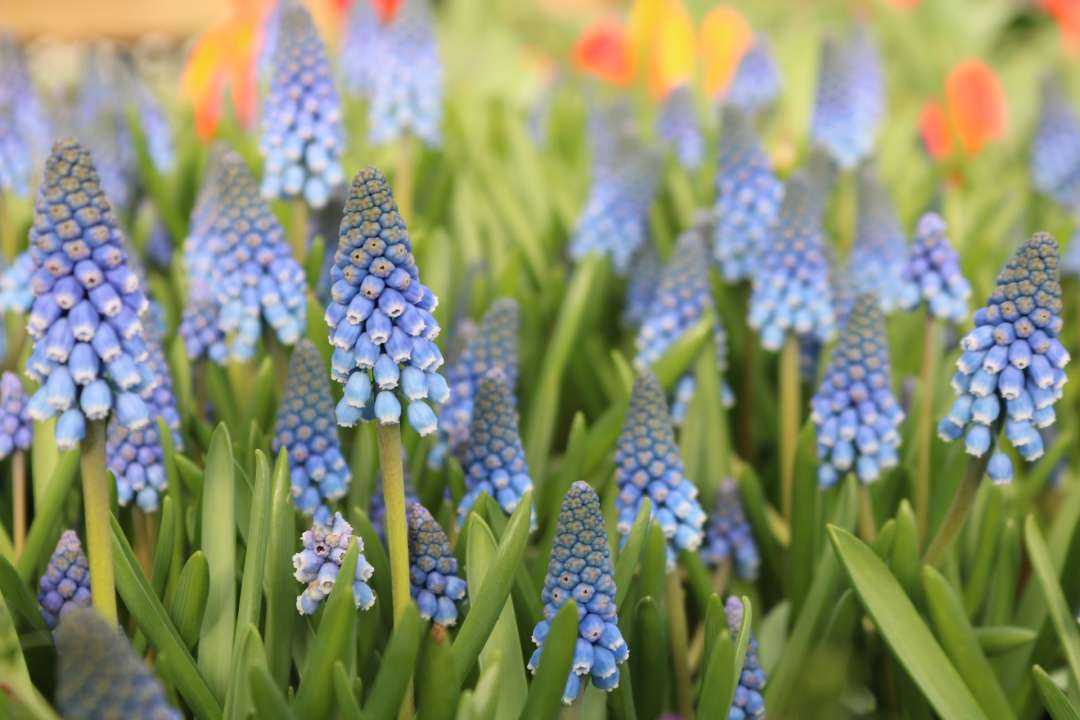
Grape Hyacinth Muscari armeniacum • Dense clusters of deep cobalt-blue flowers from March into April • One of the best companion bulbs: plant alongside tulips for stunning contrast • Naturalizes freely; forms dense mats of foliage and flower over time • Excellent in containers, borders, and as edging; 7-8 cm deep |
Glory of the Snow Chionodoxa luciliae • Cheerful pink or blue star-shaped flowers with white centres in March • Low-growing and ideal in drifts under shrubs or along path edges • Very early to bloom; one of the first blue flowers of spring • Self-seeds gently; naturalizes into charming colonies over time |
|
Siberian Squill Scilla siberica • Intensely deep blue flowers from February to March; one of the truest blues in the garden • Spreads steadily into beautiful colonies under trees and in borders • Very cold hardy and reliable; naturalizes well across BC's South Coast • Plant in groups of 25-50 for impact; 7-8 cm deep |
Wind Flower Anemone blanda • Daisy-like flowers in pink, blue, or white from February through March • Feathery foliage gives a delicate, naturalistic appearance • Spreads over time to colonize an area under trees or in rock gardens • Soak corms overnight before planting; plant 5 cm deep in drifts |
LARGE BULBS
Large bulbs: the stars of spring
Larger bulbs produce the showstopping displays that define spring gardens. Plant in generous groups and choose varieties that suit your space, colour scheme, and desired bloom time.
|
LARGE BULBS: Plant 15-20 cm deep | Space 10-20 cm apart | Groups of 5-10 |
|
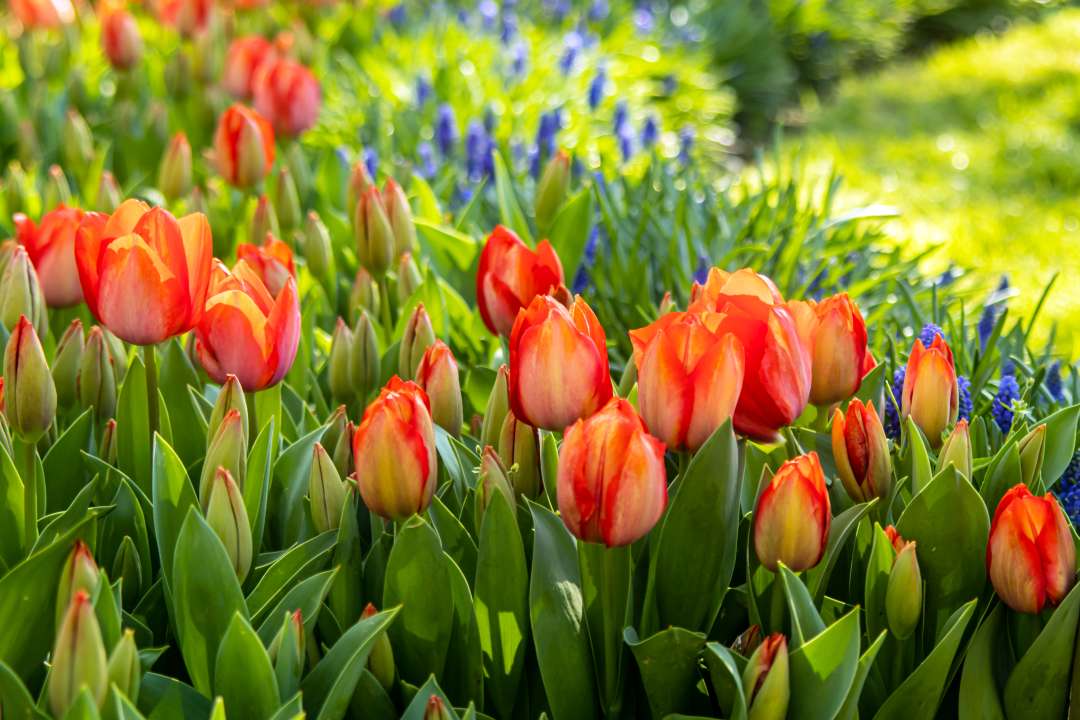
Tulip Tulipa spp. • The most iconic spring bulb: available in every colour, from single to fully double, early to late season • Early varieties bloom March-April; late varieties May; choose a mix for extended colour • Plant in bold masses by colour and height for the most spectacular display • Species tulips (T. kaufmanniana, T. tarda) naturalize better than large-flowered hybrids; excellent for rock gardens • 15-20 cm deep; 10-15 cm apart; plant in October for best results |
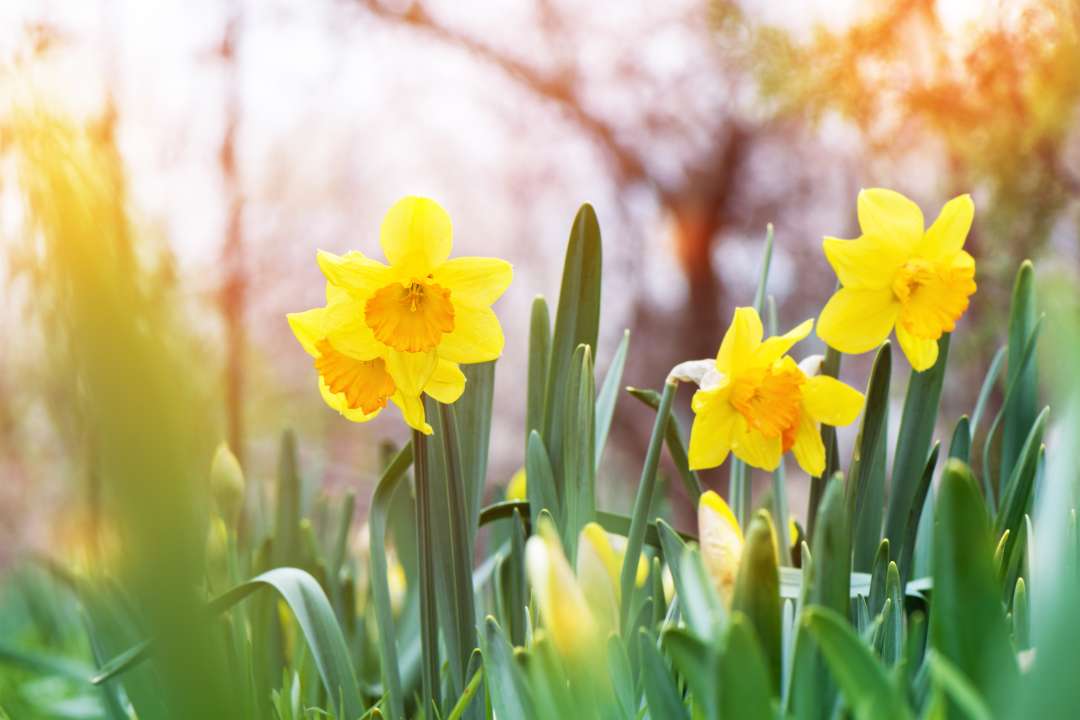
Daffodil Narcissus spp. • Spring's most reliable bulb: returns faithfully year after year with minimal effort • Available in classic yellow, white, bicolour, doubles, miniatures, and fragrant types • Completely deer and rodent resistant -- animals avoid them entirely • Dwarf varieties like 'Jack Snipe' and 'Tete-a-Tete' are excellent in containers • Naturalize beautifully in lawns and under deciduous trees; 15-20 cm deep |
|
Hyacinth Hyacinthus orientalis • Intensely fragrant flower spikes in pink, white, blue, purple, and yellow • Blooms March-April; exceptional in window boxes and containers where fragrance drifts indoors • Also excellent in formal border plantings and as cut flowers • Plant 15 cm deep; avoid overwatering once established • Second-year flowers are smaller but still beautiful; treat as annual for consistent large spikes |
Allium (Ornamental Onion) Allium spp. • Bold, architectural globe-shaped flowerheads on tall stems: May through June • Deer and rodent resistant due to onion scent • Excellent in mixed borders; dried seedheads provide ongoing interest through summer • Popular varieties: 'Globemaster' (large purple), 'Mount Everest' (white), 'Purple Sensation' • 10-15 cm deep; allow foliage to die back naturally |
|
Dutch Iris Iris x hollandica • Elegant, slender flowers in white, yellow, blue, and purple from May into June • Excellent as cut flowers; vase life of 5-7 days when cut in bud • Plant in full sun; 10 cm deep and 10-15 cm apart • Leave foliage to die down naturally after flowering to build up the bulb for next year |
German Iris Iris germanica • Large, showy flowers in an exceptionally wide range of colours and bicolours • Blooms May-June; ruffled petals and distinctive bearded falls • Plant rhizomes shallowly: the top of the rhizome should sit just at soil level, exposed to sun • Excellent as cut flowers; fragrant varieties available • Divide every 3-4 years after flowering to maintain vigour |
AFTER-FLOWERING CARE
Looking after bulbs once the flowers are gone
• Deadhead spent blooms promptly: remove faded flower heads before seed pods form, seed production uses energy needed to build next year's bulb
• Leave the stems and all foliage in place until they mostly turn yellow and die down naturally: the leaves are photosynthesizing and recharging the bulb
• Do not tie, braid, or rubber-band the foliage: this restricts light and reduces the energy returned to the bulb
• Feed with GARDENWORKS Bulb Food 3-15-8 after flowering to replenish nutrients
• Most bulbs are best left in the ground permanently: they naturalize and improve with age
|
WHEN TO LIFT AND DIVIDE Bulbs only need to be lifted when they become overcrowded and flowering declines. Wait until the foliage has completely died down and the bulbs can be separated cleanly. Remove soil, discard any soft, diseased, or very small bulbs, and store healthy bulbs in a cool, dark, dry, well-ventilated spot until replanting in autumn. |
|
COLD WEATHER AFTER EMERGENCE Do not be alarmed if bulb foliage emerges early during a mild spell and is then hit by cold or frost. Most spring bulb foliage has natural built-in frost resistance. In the case of an unusually prolonged hard freeze, a light layer of mulch over the area provides additional protection. Remove the mulch as temperatures moderate. |
DEER, RODENTS & OTHER CHALLENGES
Protecting your bulbs
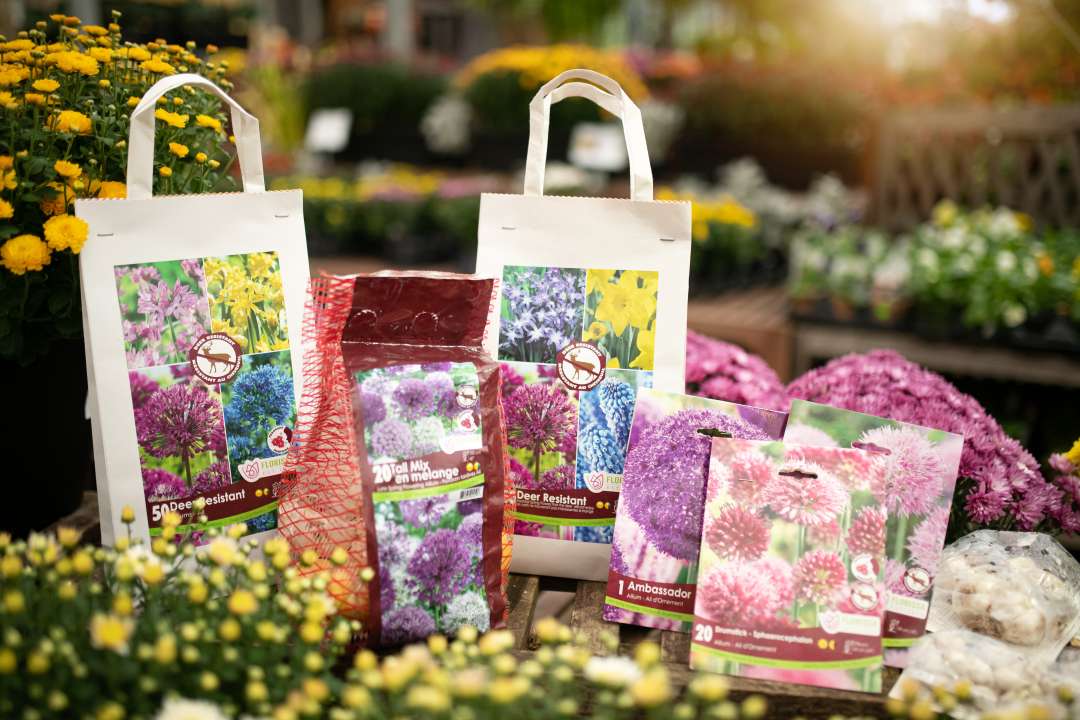
• Daffodils (Narcissus) and alliums are toxic to deer, squirrels, and other rodents: they will not eat them
• Tulips and crocuses are attractive to squirrels and deer, particularly in areas with high pressure: plant with wire mesh over the bed or use repellent
• A layer of chicken wire pegged flat just below the soil surface deters squirrel digging without affecting growth
• In Penticton, deer pressure on tulips and crocuses is significant: consider prioritizing daffodils and alliums for a lower-maintenance, deer-resistant spring display
FREQUENTLY ASKED QUESTIONS
FAQ
My tulips came up last year but did not rebloom this year. Why?
Tulips, particularly large-flowered hybrid types, are not reliably perennial in BC's mild, wet climate. They need a prolonged cold, dry summer dormancy to regenerate -- conditions that BC's South Coast does not naturally provide. For reliable annual reblooming, replant fresh tulip bulbs each autumn. Species tulips (Tulipa kaufmanniana, T. tarda, T. turkestanica) are far more reliably perennial and are worth planting if you want tulips that return. Daffodils are the go-to bulb for reliable perennial performance.
Can I plant bulbs I bought last year that have been stored?
Yes, if they have been stored correctly: cool, dark, dry, and well-ventilated. Firm, plump bulbs that have not sprouted or gone soft are fine to plant. Avoid any that are mouldy, very lightweight, or have long, etiolated sprouts. When in doubt, plant them and see: even a borderline bulb may surprise you.
When should I plant bulbs in Penticton?
Plant as early as possible in autumn in Penticton -- ideally September to mid-October -- before the ground freezes. Penticton's colder winters (Zone 6b) mean the ground freezes earlier and harder than the South Coast. Planting early gives roots time to establish before freeze-up. Mulch the planting area with 5-8 cm of bark mulch or straw after planting to insulate roots from hard freezes. Most of the bulbs in this guide are reliably cold-hardy to Zone 4-5, well within Penticton's range.
Do I need to fertilize spring bulbs?
Yes, at two key moments: at planting (use GARDENWORKS Bone Meal 2-14-0 or Bulb Food 3-15-8 mixed into the bottom of the planting hole to support root development and next year's flower formation) and immediately after flowering (use GARDENWORKS Bulb Food 3-15-8 to replenish energy in the bulb while the foliage is still green and active). Avoid high-nitrogen fertilizers, which push leafy growth at the expense of bulb development.
How do I create a spring display that blooms for as long as possible?
Choose bulbs across the full bloom spectrum: snowdrops and early crocuses for January-February, grape hyacinths, daffodils, and hyacinths for March-April, mid-season tulips and late daffodils for April, and alliums and Dutch iris for May-June. Layering bulbs in the same container ('lasagna planting') or the same bed with different bloom times gives continuous colour from the first warm days through to early summer.