 Proudly BC Owned & Operated for over 40 years.
Garlic
Planting and Care Guide - BC South Coast & Penticton
Plant October | Harvest July | Full Sun | Well-Drained Soil | Hardneck varieties produce edible scapes
|
OVERVIEW Easy to grow, deeply rewarding to harvest, and far superior in flavour to anything from a grocery store. Garlic is planted in autumn and harvested the following summer -- one of the most satisfying long-season crops in BC gardens. All garlic falls into two main types: hardneck and softneck. Understanding which suits your cooking style, storage needs, and growing conditions is the first and most enjoyable decision you will make. |
HARDNECK VS. SOFTNECK GARLIC
Choosing the right type for your garden and kitchen
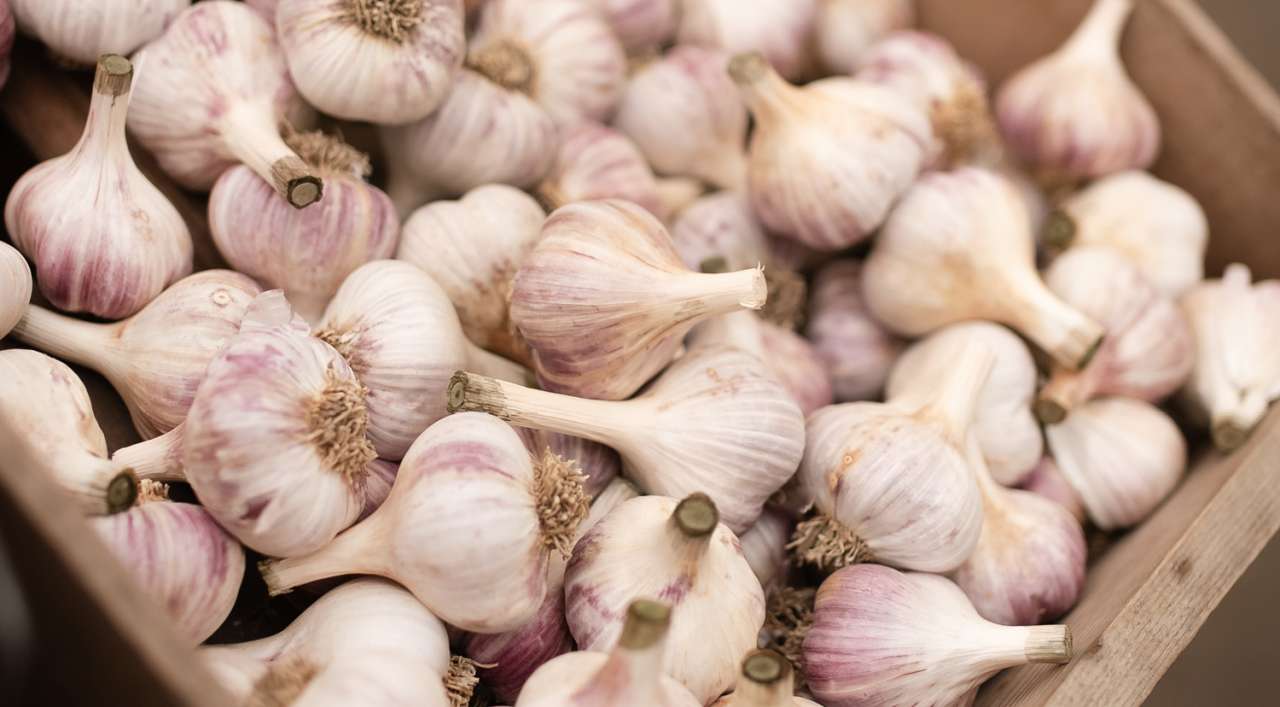
All garlic belongs to one of two broad categories: hardneck or softneck. Both grow well across BC's South Coast and in Penticton, but they differ meaningfully in flavour, clove structure, storage life, and best use in the kitchen.
|
HARDNECK • Produces edible flower stems (scapes) in spring -- remove them for bigger bulbs • Rich, complex, often spicy or pungent flavour -- the choice of many serious cooks • Fewer, larger cloves per bulb -- easier to peel • Stores 4-9 months depending on variety • Excels in colder winters: particularly well suited to Penticton and colder inland BC • Ideal for fresh use, roasting, and peak-flavour cooking |
SOFTNECK • No scapes produced -- all energy goes directly into bulb development • Milder, more versatile everyday flavour -- the standard pantry garlic • Many smaller cloves per bulb; layers of cloves like an artichoke • Stores 9-12 months -- best choice for long-term pantry supply • Flexible, pliable stems make it perfect for traditional garlic braids • Adapts readily to mild South Coast winters; very reliable and productive |
|
HARDNECK VARIETIES -- Rich, complex flavour and edible scapes |
|
Russian Red Rocambole type • One of the most popular and widely sold hardnecks at GARDENWORKS -- a BC favourite • Deep, rich, complex flavour with a robust, lingering heat • Large cloves, 8-10 per bulb, with loose purple-streaked skin that is easy to peel • Best used by January-February; stores 4-6 months |
Music Porcelain type • Large, beautiful bulbs with just 4-6 very large cloves per bulb • Bold, full flavour with moderate, clean heat; excellent raw or cooked • One of the most reliable all-round hardnecks for BC gardens • Outstanding storage for a hardneck: up to 8 months |
|
German Red Rocambole type • Bold, fiery heat with a rich, full-bodied flavour that lingers • Large bulbs with 8-12 easy-to-peel cloves • A favourite of cooks who want a pronounced, assertive garlic flavour • Stores 4-6 months; best used fresh |
Chesnok Red Purple Stripe type • Widely considered one of the finest roasting garlics available • Sweet, mellow flavour that deepens and sweetens beautifully when roasted • 8-12 cloves per bulb; well-suited to BC's South Coast climate • Good storage: 6-8 months |
|
Purple Glazer Purple Stripe type • Stunning purple-striped outer wrappers; beautiful for display and gifting • Rich, complex, slightly sweet flavour -- outstanding roasted • 8-12 cloves per bulb with vivid purple markings on the cloves themselves • One of the longer-storing hardnecks: 6-9 months |
Metechi Marbled Purple Stripe type • Intense, complex flavour that mellows and sweetens beautifully when cooked • Particularly well-adapted to BC's cooler coastal winters • 6-8 large cloves per bulb with marbled purple markings • Good storage: 6-9 months |
|
SOFTNECK VARIETIES -- Mild, versatile flavour and exceptional storage |
|
Regular White Softneck type • A reliable, classic everyday garlic • Mild, clean, versatile flavour; excellent raw, cooked, and for preserving • Many cloves per bulb with tight, white papery wrappers • Outstanding storage: up to 12 months when properly cured • Flexible stems make it ideal for traditional garlic braids • Well-suited to BC South Coast mild, wet winters; consistent and productive |
|
|
WHICH TYPE SHOULD I CHOOSE? For the richest, boldest flavour, edible scapes, and colder climates (including Penticton): start with a hardneck. Russian Red is the most popular entry point and a perennial GARDENWORKS favourite. For the longest storage life, braiding, mild everyday cooking, and reliable production on the mild South Coast: Regular White is our softneck offering and an excellent all-round choice. |
SOIL PREPARATION
Getting the soil right before planting
• Choose a spot with at least 6 hours of direct sunlight daily
• Garlic needs light, well-drained, humus-rich soil; heavy clay or waterlogged spots cause bulb rot
• If soil pH is below 5.5, add garden lime before planting; garlic dislikes overly acidic conditions
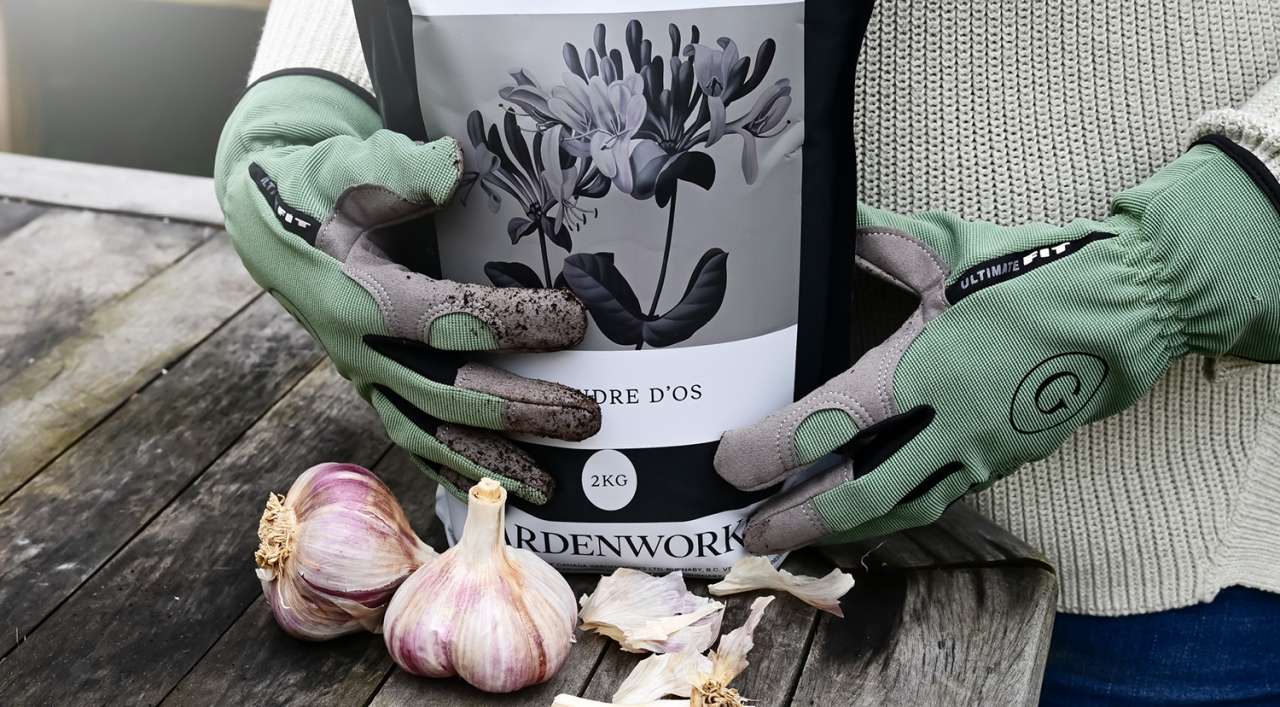
• Work in GARDENWORKS Bone Meal 2-14-0 at planting: it releases slowly through winter, feeding roots all season
• Short on space? Garlic grows well in a deep container with good drainage holes
PLANTING
How to plant garlic
• Best time to plant: October, across all GARDENWORKS locations
• Separate the bulb into individual cloves just before planting; handle carefully to keep the papery skins intact
• Plant each clove 5 cm deep and 10 cm apart, pointy end up, flat end down
• Avoid crowding: competition between cloves produces smaller bulbs
• Mulch after planting to suppress weeds and protect against heavy winter rain and soil erosion
|
SPRING CARE • Apply a light topdressing of bone meal, SeaSoil, compost, or organic fertilizer in early spring to support bulb development • Garlic is a heavy nitrogen feeder: apply a high-nitrogen fertilizer (such as blood meal or a balanced vegetable fertilizer) at planting and again in early spring, before the end of April. Nitrogen drives the leafy top growth that directly determines final bulb size • Stop applying nitrogen fertilizer after the end of April: feeding nitrogen too late in the season pushes leafy growth at the expense of bulb development as the plant shifts its energy downward • Water during dry spells but avoid overwatering; poor drainage or excess moisture causes bulb rot • Remove garlic scapes (the curling flower stems) from hardneck varieties as they form: this redirects energy into the bulb Tip: do not compost scapes -- saute in butter, chop into stir-fries, or blend into garlic scape pesto. Softneck varieties do not produce scapes. |
HARVESTING & STORING
Harvest and cure for maximum flavour
• Garlic typically matures in late July
• Stop watering in the final 2-3 weeks before harvest to improve curing and storage life
• Harvest when half to three-quarters of the leaves have yellowed
• Lift bulbs gently by hand to avoid damage; use a fork only if the soil is very compact
• Remove soil carefully, leaving as much papery skin intact as possible
|
CURING AND STORAGE • Cure in a warm, dry, well-ventilated spot for 1-2 weeks; leave space between bulbs for airflow • Never wash garlic bulbs • Once dry, brush off remaining soil and trim dead leaves • Store in a cool, dark, dry spot with good airflow • Hardnecks store 4-9 months depending on variety; use before late winter for best flavour • Softnecks store 9-12 months when properly cured -- ideal for year-round supply • Never refrigerate garlic: cold causes cloves to soften, sprout, and lose flavour |
FREQUENTLY ASKED QUESTIONS
FAQ
Can I plant garlic bought at the grocery store?
You can, but it is not recommended. Commercially grown garlic is often treated to suppress sprouting and may carry disease. Certified seed garlic from GARDENWORKS is grown specifically for planting, untreated, and selected for vigour and flavour. The difference in the resulting harvest is significant.
What are the curly green stems that appear in spring?
Those are garlic scapes, the flowering stems produced by hardneck varieties only. Remove them as they curl to keep the plant focused on building the bulb. They are entirely edible and delicious: chop into stir-fries, saute in butter, blend into pesto, pickle, or grill whole. Softneck varieties do not produce scapes.
My garlic bulbs are small. What went wrong?
The most common causes are planting cloves too close together (10 cm minimum), not removing scapes on hardneck varieties in spring, not feeding enough nitrogen in early spring (before end of April), or harvesting too early. Soil that is too dense, poorly drained, or heavily acidic also limits bulb size.
Is garlic worth growing if I only have a small garden or containers?
Absolutely. Garlic is one of the most space-efficient crops you can grow. A single square metre can yield 50-100 bulbs. It thrives in deep containers and raised beds, and acts as a mild companion plant that deters some pests from neighbouring vegetables.