 Proudly BC Owned & Operated for over 40 years.
Clematis
Clematis Care Guide for BC
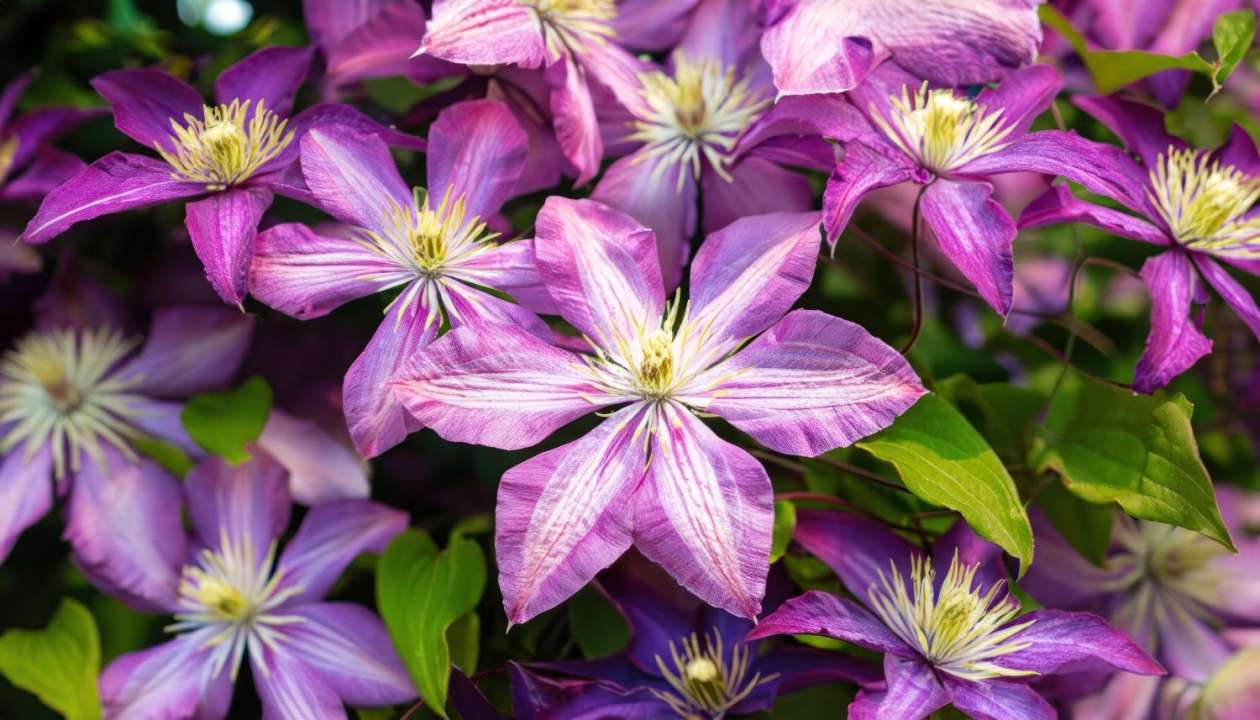
How to Plant, Grow & Prune Clematis Vines
Clematis are spectacular climbing vines known for their large, colourful flowers and long bloom season. With hundreds of varieties available, clematis can bloom from early spring through late summer depending on the type.
Most clematis are deciduous vines, but some evergreen varieties grow well in mild coastal climates.
With the right planting location and pruning, clematis are long-lived and rewarding garden plants.
Understanding Clematis Types
Clematis are grouped by flowering time and pruning needs.
Group 1 – Early Blooming Clematis
-
Flower in early spring
-
Bloom on old wood (last year’s growth)
-
Includes evergreen clematis
Examples:
-
Clematis armandii (Evergreen Clematis)
-
Clematis montana

Group 2 – Summer Blooming Clematis
-
Bloom in late spring and early summer
-
May rebloom later in the season
-
Bloom on old and new wood
These include many popular garden varieties.
Group 3 – Late Blooming Clematis
-
Bloom mid-summer through fall
-
Bloom on new wood
Examples:
-
Clematis viticella
-
Clematis jackmanii
These are often the easiest types to prune.
How to Plant Clematis
Clematis prefer sunny tops and cool roots.
Sun Requirements
-
Full sun to partial shade
-
Ideally 6 hours of sun daily
However:
-
Roots should stay cool and shaded.
Soil Requirements
Clematis prefer:
-
Rich, well-drained soil
-
Neutral to slightly alkaline soil
-
Consistent moisture
-
Amend soil with compost before planting with Sea Soil, Gardenworks Composted Mushroom Manure or Gardenworks Composted Cattle Manure
Planting Steps
-
Dig a hole twice as wide as the root ball.
-
Add compost to improve soil.
-
Plant slightly deeper than the nursery pot (this protects stems).
-
Water thoroughly with GW Transplanting Fertilizer 5-15-5 to encourage root development
-
Mulch the root zone.
Plant low-growing plants nearby to shade the roots.
Watering Clematis
-
Keep soil evenly moist
-
Water deeply during dry periods
-
Avoid allowing soil to dry completely
-
Mulch annually to maintain moisture
Young clematis require consistent watering during establishment.
Fertilizing Clematis
-
Apply compost in early spring
-
Use balanced slow-release fertilizer if needed. We recommend Gardenworks All Purpose Plant Food 6-8-6
-
Avoid excessive nitrogen
Healthy soil supports strong flowering.
Pruning Clematis (By Group)
Pruning depends on the clematis type.
Group 1 Clematis
-
Prune after flowering
-
Remove dead or damaged stems only
-
Minimal pruning needed
Group 2 Clematis
-
Light prune in early spring
-
Remove weak or damaged stems
-
Deadhead after first bloom to encourage rebloom
Group 3 Clematis
-
Prune hard in late winter or early spring
-
Cut stems back to 12–18 inches
-
New growth produces flowers
Clematis Pruning Quick Guide
Clematis varieties are divided into three pruning groups based on when they flower. Knowing your group helps ensure you prune at the right time and avoid removing flower buds.
Quick Pruning Chart
|
Clematis Group |
Bloom Time |
Blooms On |
When to Prune |
How Much to Prune |
Examples |
|
Group 1 – Early Blooming |
Early spring |
Old wood |
After flowering |
Minimal pruning |
Clematis armandii, Clematis montana |
|
Group 2 – Summer Blooming |
Late spring to early summer |
Old & new wood |
Light prune in early spring |
Remove weak or dead stems |
Many large-flowered hybrids |
|
Group 3 – Late Blooming |
Mid-summer to fall |
New wood |
Late winter or early spring |
Cut back to 12–18 inches |
Clematis viticella, Clematis jackmanii |
Simple Rule to Remember
Early bloomers → prune after flowering
Late bloomers → prune in early spring
When in doubt, prune lightly until you confirm the variety.
Special Note for Evergreen Clematis
Evergreen clematis (such as Clematis armandii) belong to Pruning Group 1.
Important care differences:
-
Prune only after flowering
-
Avoid heavy pruning
-
Protect from cold winter winds
-
Best suited to South Coastal BC’s mild climate
*Evergreen clematis will struggle in colder inland regions like Penticton.
Evergreen Clematis Care
Evergreen clematis differ slightly from deciduous types.
Common species include Clematis armandii.
A very fast-growing variety once established
Climate Suitability:
Evergreen clematis grow best in mild coastal climates.
Key Care Differences
-
Protect from cold winter winds
-
Plant in sheltered locations
-
Avoid harsh winter pruning
-
Provide strong support structures
-
Tolerant of lower light levels
They produce fragrant white flowers in early spring and maintain foliage year-round.
Evergreen clematis are best suited to South Coastal BC gardens.
Growing Clematis in South Coastal BC
Coastal BC provides excellent conditions for many clematis varieties.
Climate Advantages
-
Mild winters
-
Moderate summer heat
-
Longer growing season
Both deciduous and evergreen clematis perform well here.
Coastal Considerations
-
Ensure good drainage in clay soils
-
Provide sturdy supports such as trellises or arbors
-
Protect early spring blooms from strong winds
Evergreen clematis perform especially well in coastal climates.
Growing Clematis in Penticton & the Okanagan
Clematis grow well inland but require slightly different care.
Climate Challenges
-
Hot, dry summers
-
Colder winter temperatures
-
Rapid soil drying
Inland Care Adjustments
-
Provide afternoon shade for roots
-
Water deeply and consistently
-
Mulch heavily to conserve moisture
-
Protect young plants during winter
Group 3 clematis are often the most reliable inland.
*Evergreen clematis generally do not perform well in Penticton due to colder winters.
Companion Plants for Clematis
Clematis pair beautifully with shrubs and perennials that support shaded roots.
Shrub Companions
-
Roses
-
Hydrangeas
-
Ninebark
-
Spirea (non-invasive varieties)
Perennial Companions
-
Salvia
-
Catmint (Nepeta)
-
Heuchera
-
Hellebores
Ground Layer
-
Hardy geranium
-
Creeping thyme
-
Epimedium
Seasonal Clematis Care Calendar
Early Spring
-
Prune Group 2 and Group 3 varieties
-
Apply compost
Late Spring
-
Support new growth
-
Monitor moisture
Summer
-
Water during dry periods
-
Deadhead reblooming varieties
Fall
-
Maintain mulch
-
Avoid heavy pruning
Winter
-
Protect young plants inland
Clematis FAQs
Why isn’t my clematis blooming?
Incorrect pruning is the most common cause.
Can evergreen clematis grow in Penticton?
They will struggle due to colder winter temperatures and we do not recommend them for our Penticton guests.
Do clematis need full sun?
They prefer sunny tops and shaded roots.
When should I prune clematis in BC?
It depends on the clematis group — early, mid, or late flowering.