 Proudly BC Owned & Operated for over 40 years.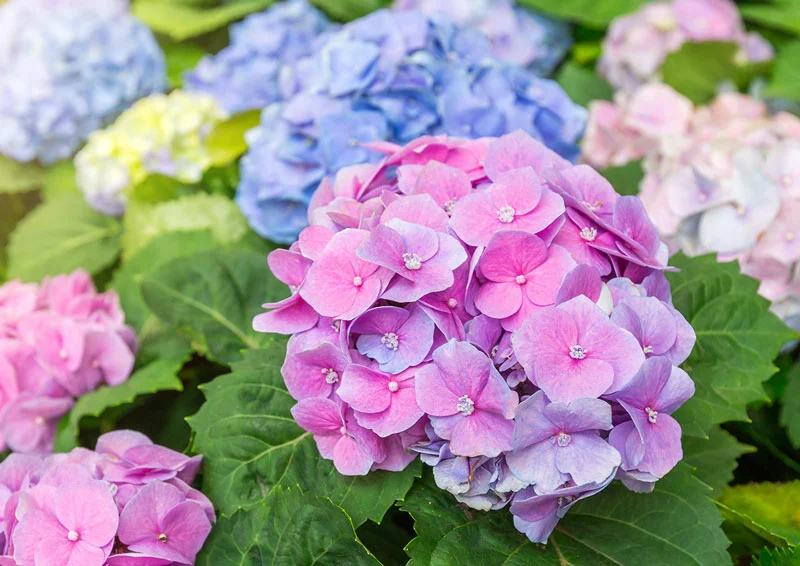
Here's the most important thing to know about hydrangeas: the type of hydrangea you have determines when and how you prune. Prune at the wrong time, and you'll accidentally cut off next year's blooms. Let's break it down simply.
Know Your Hydrangea First
There are two main groups when it comes to pruning:
Group 1 — Blooms on OLD wood (buds formed last year):
-
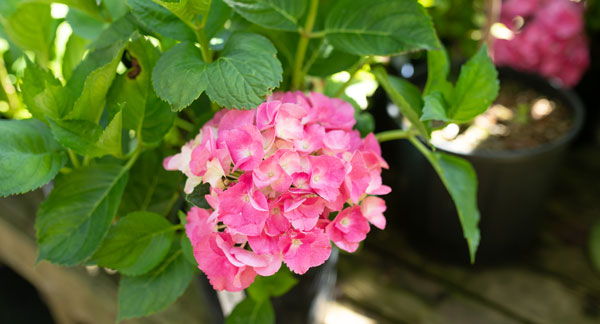
Bigleaf Hydrangea (Hydrangea macrophylla) — the classic mophead and lacecap varieties, often pink or blue
-
Oakleaf Hydrangea (Hydrangea quercifolia)
-
Climbing Hydrangea (Hydrangea anomala)
Group 2 — Blooms on NEW wood (buds formed this year):
-
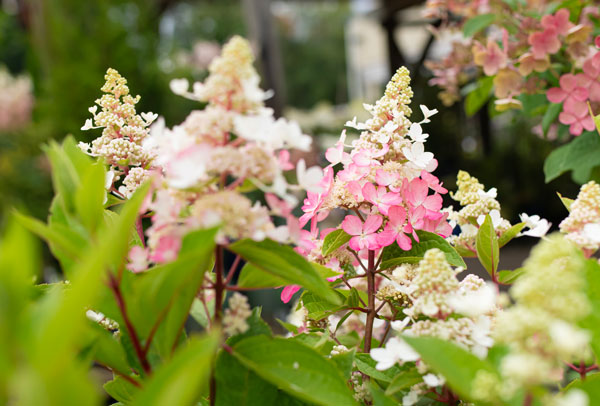
Panicle Hydrangea (Hydrangea paniculata) — cone-shaped white or pink flower clusters; very common in Canadian gardens
-
Smooth Hydrangea (Hydrangea arborescens) — includes the popular 'Annabelle' variety
Not sure which you have? A good rule of thumb: if it blooms in mid-summer with cone-shaped flowers, it's likely a panicle hydrangea (new wood). If it blooms earlier with big round clusters of pink or blue, it's likely a bigleaf (old wood).

Pruning Group 1 (Old Wood — Bigleaf, Oakleaf, Climbing)
When to Prune
-
Right after blooming (mid to late summer). This gives the plant time to set new buds for next year before winter.
-
Avoid pruning in fall, winter, or early spring — you will cut off your flower buds!
How to Prune — Step by Step
-
After flowers fade, remove the old flower heads by cutting just below the spent bloom, down to the first set of healthy leaves.
-
Remove dead or weak stems by cutting them all the way to the base.
-
That's it! Less is more with these hydrangeas. A light clean-up is all they need.
-
In spring, once you can see which stems survived winter, remove any fully dead stems at the base.
Beginner Tip
If your bigleaf hydrangea isn't blooming, over-pruning (or pruning at the wrong time) is usually the culprit. When in doubt, skip the pruning and just remove dead wood.
Pruning Group 2 (New Wood — Panicle & Smooth)
When to Prune
-
Early spring, just as new growth begins to emerge. These are much more forgiving!
How to Prune — Step by Step
-
Cut back stems by 1/3 to 1/2 in early spring. You can be quite bold with these varieties — the harder you prune, the fewer but larger the blooms will be. A lighter trim gives more, smaller flowers.
-
Remove any dead or crossing stems at the base.
-
For panicle hydrangeas grown as a small tree (standard form), focus on thinning out crowded branches and removing dead wood.
-
Leave the dried flower heads on through winter if you like — they look beautiful in frost and provide some winter interest, and you can simply remove them when you prune in spring.
Beginner Tip
Panicle hydrangeas (like 'Limelight' or 'Pinky Winky') are the most beginner-friendly hydrangeas to prune — they're very hard to mess up!
Your Quick-Reference Pruning Cheat Sheet
|
Plant |
When to Prune |
How Much to Cut |
|
Perennials |
Fall or early spring |
Down to 3–4" from ground |
|
Roses |
Early spring (+ deadhead in summer) |
Remove dead canes; cut healthy canes back 1/3–1/2 |
|
Hydrangea (Old Wood) |
Right after blooming (summer) |
Light tidy-up only; remove dead stems |
|
Hydrangea (New Wood) |
Early spring |
Cut back by 1/3 to 1/2 |
Tools You'll Need
Before you start, make sure you have:
-
Sharp bypass pruners for
-
Thick gloves
-
A clean cloth and rubbing alcohol to wipe your blades between plants — this prevents spreading disease
Happy pruning! Remember, plants are resilient. A confident cut is better than a hesitant one. If you have questions about the specific plants in your garden, our team at GardenWorks is always happy to help.
Visit us in-store or browse our full library of care guides at gardenworks.ca