 Proudly BC Owned & Operated for over 40 years.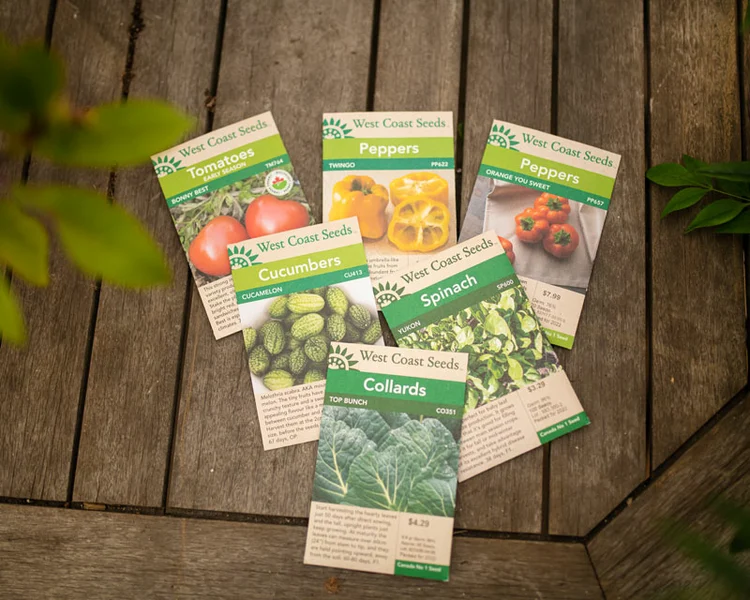
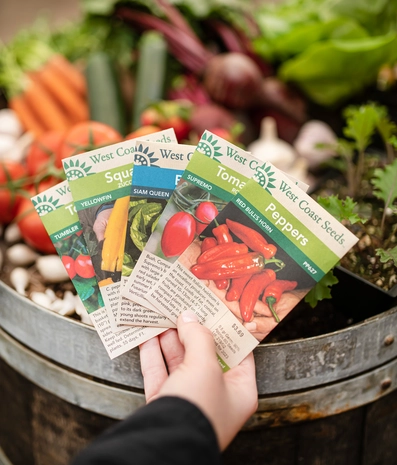
Seed packets are packed with essential information that can make or break your garden’s success. Whether you’re planting vegetables, herbs, or flowers, understanding what’s printed on the package helps you time, space, and care for your plants properly.
Here’s how to decode everything on a typical seed packet.
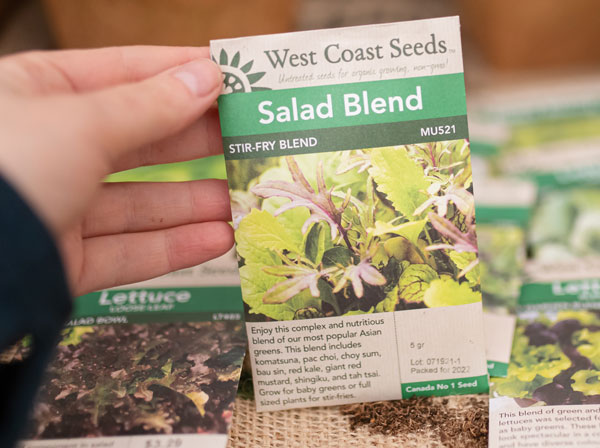
Different companies feature different layouts, but the core information is standard. The front of the packet lists the common name (like Carrot or Zinnia) and the specific variety (such as ‘Rainbow Blend’ or ‘California Giant’).
The variety tells you important details about size, flavor, color, and growth habits.
- Days to germination – How long seeds take to sprout (e.g., 7–14 days).
- Days to maturity – Time from planting to harvest or bloom.
You may also see:
- Organic – Seeds produced according to certified organic standards.
- Non-GMO – Seeds produced without genetic modification
- Open Pollinated (OP)– Created by crossing pollen between two parents of the same variety
- Heirloom – Open-pollinated varieties passed down for generations.
- Hybrid (F1 or F2) – Crossbred for traits like disease resistance or uniform growth.
Choosing the right variety ensures it matches your climate, space, and taste preferences.
Seed packets often use simple icons or text:
- Full sun – 6–8 hours of direct sunlight daily
- Partial sun/shade – 3–6 hours of sun
- Shade – Less than 3 hours of direct sun
Matching plants to the correct light conditions prevents weak, leggy growth. Watering guidance may also indicate whether the soil should remain consistently moist or tolerate drying between waterings.
Seed Count, Lot Number & Test Date
On the back or bottom edge, you’ll usually find:
- Seed count or weight
- Lot number (for quality tracking)
- Test date – Indicates when germination was last tested
Seeds lose viability over time, so fresher seeds typically perform better.
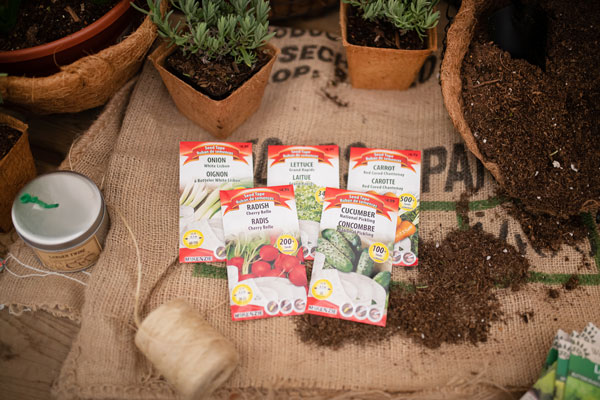
The back of the seed packet typically contains more details planting instructions and hardiness zones.
Planting Instructions
- Planting depth – How deep to sow the seed (e.g., ¼ inch deep).
- Spacing – Distance between plants and rows.
- Indoor vs. direct sow – Some seeds (like tomatoes) start indoors; others (like beans) prefer direct planting outdoors.
Planting too deep or too close together can reduce germination and stunt growth.
Hardiness Zone & Frost Dates
Many packets reference hardiness zones, often based on the United States Department of Agriculture (USDA) system. This tells you which climates the plant thrives in.
You may also see:
- Start indoors X weeks before last frost
- Sow outdoors after danger of frost has passed
Planting too early can expose seedlings to frost damage, while planting too late may shorten your harvest season.
Final Tips for Success
- Keep packets for reference throughout the growing season.
- Label your garden rows clearly.
- Store unused seeds in a cool, dry place.
- Consider keeping a garden journal to track what works best.
By taking a few minutes to read and understand your seed packets, you give your garden the best possible start. Those small envelopes contain big guidance—use it well, and you’ll reap the rewards all season long.