 Proudly BC Owned & Operated for over 40 years.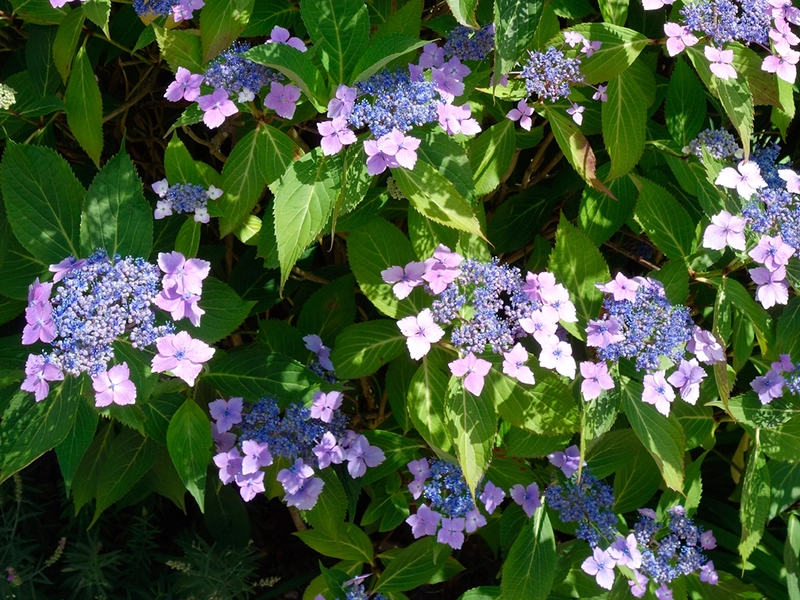
A summary of four key Hydrangea species typically available at GARDENWORKS during the summer season.
Whether you're drawn to the bold blooms of Macrophylla, the delicate lacecaps of Serrata, the cone-shaped clusters of Paniculata, the oak-leaf charm of Quercifolia, or the elegance of Arborescens — there's a hydrangea made for your space
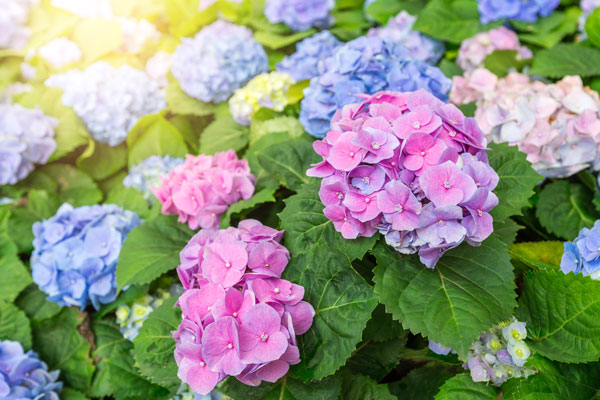
Hydrangea macrophylla — Bigleaf Hydrangea
The most widely recognized hydrangea, known for its large, bold blooms. Available in mophead (globe-shaped) or lacecap forms, it is a garden classic prized for its showy floral display.
A standout trait is its color-changing ability — flower color shifts from pink to blue depending on soil pH.
- Acidic soils produce blue blooms
- Alkaline soils produce pink. Best suited to partial shade with consistent moisture.
|
Bloom Form |
Mophead or Lacecap |
|
Bloom Color |
Pink to blue (pH-dependent); also white and purple varieties |
|
Sun |
Part shade; sensitive to afternoon sun |
|
Water |
Regular moisture; not drought-tolerant |
|
Hardiness |
Zones 5–9 (buds may be damaged by late frosts) |
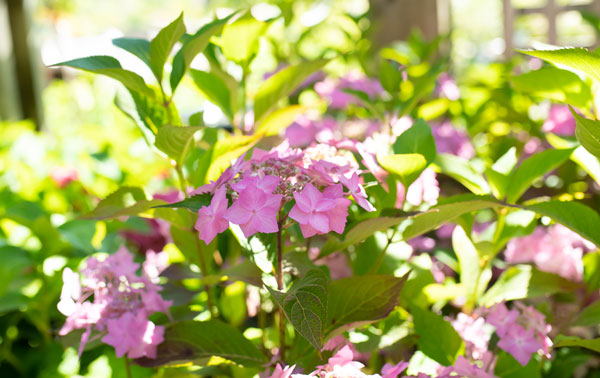
Hydrangea serrata — Mountain Hydrangea
A close relative of macrophylla, mountain hydrangea is more compact and cold-hardy. Native to the mountains of Korea and Japan, it is well-suited to smaller gardens and cooler climates.
It typically produces delicate lacecap-style blooms with small fertile flowers surrounded by larger sterile ones. Like macrophylla, it can shift color with soil pH, but tends to display softer, more muted tones.
|
Bloom Form |
Lacecap (primarily) |
|
Bloom Color |
Soft pink to blue (pH-dependent) |
|
Sun |
Part shade; tolerates more sun than macrophylla in cooler climates |
|
Water |
Regular moisture; well-drained soil |
|
Hardiness |
Zones 5–9; generally hardier than macrophylla |
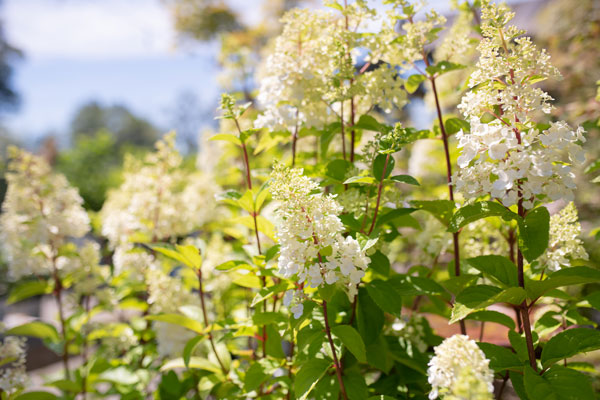
Hydrangea paniculata — Panicle Hydrangea
Distinguished by its cone-shaped (panicle) flower clusters, which emerge white or cream in summer and often age to pink or burgundy by fall. The most cold-hardy and adaptable of the four species.
One of the easiest hydrangeas to grow — it tolerates full sun and is more drought-resistant than other species. Unlike macrophylla and serrata, its bloom colour does not change with soil pH.
|
Bloom Form |
Panicle (cone-shaped) |
|
Bloom Color |
White/cream aging to pink or burgundy; not pH-dependent |
|
Sun |
Full sun to part shade |
|
Water |
Moderate; more drought-tolerant than other species |
|
Hardiness |
Zones 3–8; the most cold-hardy species |
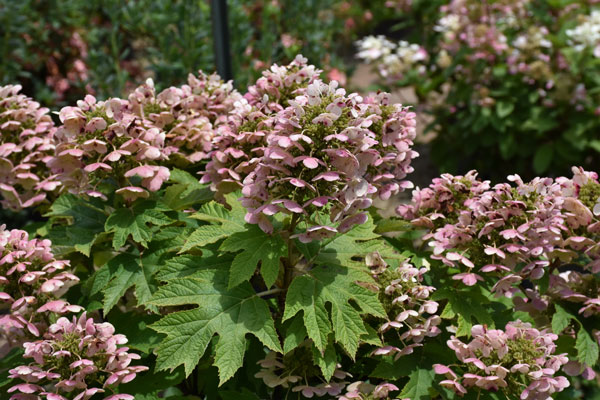
Hydrangea quercifolia — Oakleaf Hydrangea
Named for its distinctive oak-shaped leaves, this North American native offers exceptional multi-season interest: cone-shaped white flowers in summer, stunning red-orange fall foliage, and attractive exfoliating bark in winter.
It tolerates shade and dry conditions better than most hydrangeas, making it a versatile choice for challenging spots. An excellent option for naturalistic or woodland garden settings.
|
Bloom Form |
Panicle (cone-shaped) |
|
Bloom Color |
White aging to pinkish-brown; not pH-dependent |
|
Sun |
Part shade to full shade |
|
Water |
Moderate; better drought tolerance than macrophylla |
|
Hardiness |
Zones 5–9; native to southeastern North America |
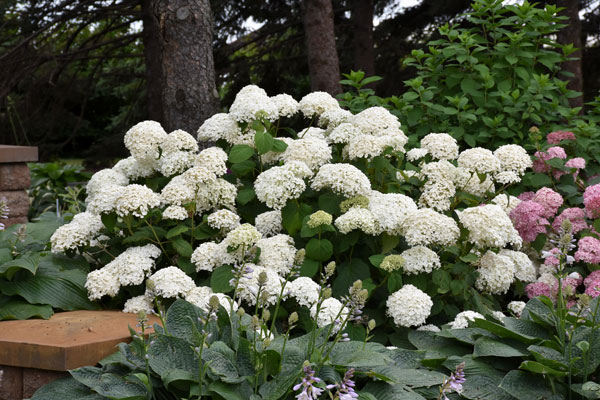
Hydrangea arborescens — Smooth Hydrangea
A North American native known for its large, rounded mophead blooms, most commonly in white or soft green. It is a reliable and low-maintenance species that flowers on new wood each season.
Even if cut back hard in spring, it will reliably bloom that same summer — making it one of the most forgiving hydrangeas for the garden. It is also notably tolerant of shade and cold.
|
Bloom Form |
Mophead (large rounded clusters) |
|
Bloom Color |
White or soft green; not pH-dependent |
|
Sun |
Part shade to full shade |
|
Water |
Regular moisture; prefers rich, moist soil |
|
Hardiness |
Zones 3–9; one of the hardiest species |
Quick Comparison
|
Species |
Bloom Shape |
Color Change? |
Sun |
Hardiness |
|
H. macrophylla |
Mophead / Lacecap |
✅ Yes |
Part shade |
Zones 5–9 |
|
H. serrata |
Lacecap |
✅ Yes |
Part shade |
Zones 5–9 |
|
H. paniculata |
Panicle (cone) |
❌ No |
Full sun – part shade |
Zones 3–8 |
|
H. quercifolia |
Panicle (cone) |
❌ No |
Part shade – shade |
Zones 5–9 |
|
H. arborescens |
Mophead |
❌ No |
Part shade – full shade |
Zones 3–9 |